From article to Knowledge Pod
Why I no longer want to think only in articles.
Nederlandse versie →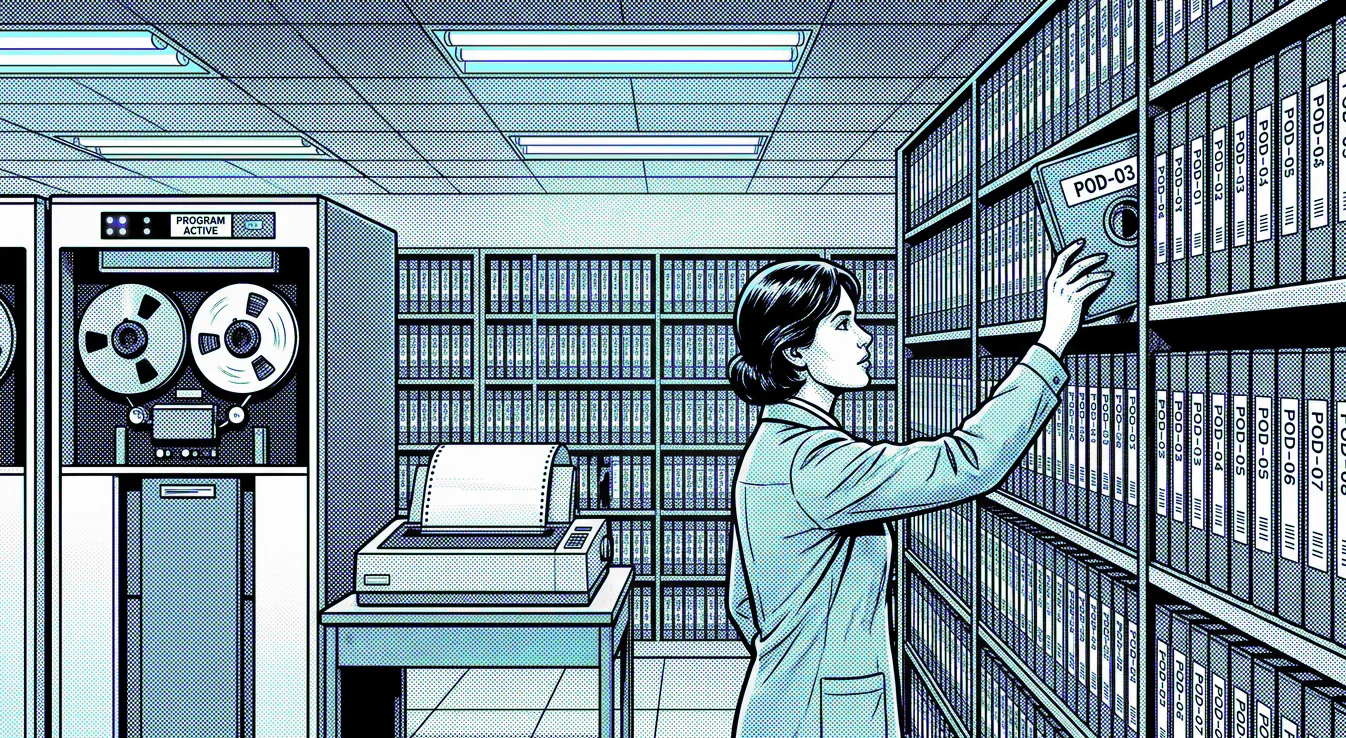
I began researching OpenClaw with the idea of writing one good field guide about it.
A comprehensive article that would bring it all together: what OpenClaw is, how to install it, how agents, memory, skills and channels work, what security questions come with it, and how you can build something with it yourself.
But during the research, that form began to chafe.
Not because the material wouldn’t fit in one text. The problem was that different readers need different things from the same source.
A beginner wants to know what OpenClaw is and where to start. A builder is looking for a route from installation to a working agent. A developer wants to understand the technical structure. Someone evaluating security mostly wants to see the risks and dependencies. And sometimes you just want to read the full source, without a route already chosen for you.
The subject is the same. The source material is the same. But the desired outcome differs.
That is where the insight emerged: some subjects do not ask for one article, but for one maintained source that can be opened in multiple ways.
The model came from The Matrix
The words I needed to grasp that idea came from The Matrix.
Not as a reference after the fact, but as the image that made the structure suddenly clear.
In the film a Pod is the container. A Pill marks the moment of choice and activation. A Program determines what gets loaded. What emerges from that is a reality.
That structure turned out to be surprisingly useful for knowledge publishing.
A Knowledge Pod is the container around one subject. Inside it lies a Body of Knowledge: the maintained collection of sources, analyses, notes and findings. The visitor chooses a Pill. That activates a Program. The Program processes the Body of Knowledge into a reality: a concrete outcome you can read and use.
For example a beginner’s path. A build route. A technical map. A security view. Or the full source.
I borrow the structure from The Matrix, not the ornament. No green code-rain, no red-and-blue-pill romance. Just a model that is simple to explain:
Pod contains Body of Knowledge. Pill activates Program. Program creates reality.
Not just thought through, but built
I did not want Knowledge Pods to remain a nice concept on a website. The model had to become executable.
So I developed two MCP servers.
The first creates and maintains the Body of Knowledge of a Pod. It collects and organises the source material on which all outcomes rest.
The second defines the Pills and their accompanying Programs, and uses those to generate the realities that can be published.
That changes how I work with content.
A reality is no longer a separate article that has to be maintained on its own. When the Body of Knowledge changes, existing Programs can be re-executed on the updated source. When a Program changes, an adjusted reality can be generated from the same Body of Knowledge.
With a traditional article, the text is usually the end product. With a Knowledge Pod, the maintained source and the Programs are the foundation. The texts you read are outcomes of those.
OpenClaw as the first Pod
OpenClaw became the first Knowledge Pod precisely because this subject made clear why one article was not enough.
OpenClaw is an open-source runtime for personal AI agents. It covers installation, architecture, models, memory, channels, skills, automation and security all at once. That makes it a rich subject, but also one that is hard to capture in a single straight text.
Within the OpenClaw Pod, the same Body of Knowledge can therefore be opened in different ways:
- Beginner’s path for those who first want to understand what OpenClaw is.
- Build route for those who want to get started with it.
- Mental map for those who want to see through the idea behind the system.
- Technical map for those who want to study the architecture and components.
- Security view for those who want to assess the risks.
- Source view for those who want to read the full material.
These are not six coincidentally related articles. They are different Programs being executed on the same maintained Body of Knowledge.
What changes is not the source. What changes is what the Program makes of it.
No chat button under an article
A Knowledge Pod is also something different from an article you can ask AI questions of.
With such an article, the text remains the main form. The reader formulates a question and gets an answer back on the spot. That can be useful, but the outcome is temporary and depends on the question asked at that moment.
With a Knowledge Pod, the reader chooses a predefined Pill. That activates a Program deliberately built for a certain kind of outcome. What you open is not a stray chat answer, but a self-contained reality with visible provenance.
A reality can record which Pod it comes from, which version of the Body of Knowledge was used, which Program was executed, when it was generated, and which model was involved.
That does not automatically make a reality definitive or flawless. It does make it traceable.
A different way of publishing
Knowledge Pods do not mean articles disappear.
Some ideas call for one essay. Some experiments call for one clear report. A linear text often remains exactly the right form.
But subjects that keep growing, serve different types of readers and are useful in multiple forms, ask for something else.
For those subjects I no longer want to start with the question: which article should I write?
I want to start with the question: which Body of Knowledge is worth building, and which realities should it make possible?
OpenClaw is the first Pod in which that model becomes visible.
It started with the feeling that one article was no longer enough. The Matrix gave the structure. Two MCP servers made it executable.
One maintained Body of Knowledge. Multiple Programs. Multiple realities.
Choose a Pill. Activate a Program. Open a reality.